Phraseologia Lettica (Manc1638_PhL) Pilnteksta skats Bibliogrāfija
| [278.lpp.] | |
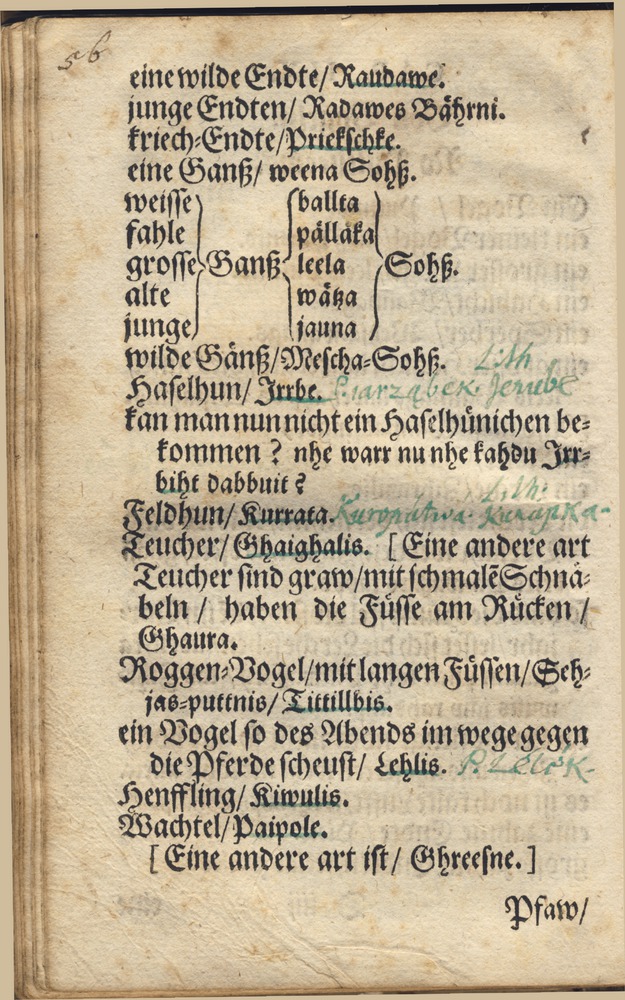
| Manc1638_PhL_278_1 | @v{eine wilde Endte/} Raudawe. |
| Manc1638_PhL_278_2 | @v{junge Endten/} Raudawes{Radawes} Bährni. |
| Manc1638_PhL_278_3 | @v{kriech=Endte/} Priekſchke. |
| Manc1638_PhL_278_4 | @v{eine Ganß/} weena Sohß. |
| Manc1638_PhL_278_5 | @v{weiſſe Ganß{}} ballta Sohß{}. |
| Manc1638_PhL_278_6 | @v{fahle Ganß{}} pälläka Sohß{}. |
| Manc1638_PhL_278_7 | @v{groſſe Ganß} leela Sohß. |
| Manc1638_PhL_278_8 | @v{alte Ganß {}} wätza Sohß{}. |
| Manc1638_PhL_278_9 | @v{junge Ganß{}} jauna Sohß{}. |
| Manc1638_PhL_278_10 | @v{wilde Gänß/} Meſcha=Sohß. |
| Manc1638_PhL_278_11 | @v{Haſelhun/} Jrrbe. |
| Manc1638_PhL_278_12 | @v{kan man nun nicht ein Haſelhünichen be-} |
| Manc1638_PhL_278_13 | @v{kommen?} nhe warr nu nhe kahdu Jrr- |
| Manc1638_PhL_278_14 | biht dabbuit? |
| Manc1638_PhL_278_15 | @v{Feldhun/} Kurrata. |
| Manc1638_PhL_278_16 | @v{Teucher/} Ghaighalis. @v{[Eine andere art} |
| Manc1638_PhL_278_17 | @v{Teucher ſind graw/ mit ſchmalẽ Schnä-} |
| Manc1638_PhL_278_18 | @v{beln/ haben die Füſſe am Rücken} |
| Manc1638_PhL_278_19 | Ghaura. |
| Manc1638_PhL_278_20 | @v{Roggen=Vogel/ mit langen Füſſen/} Ꞩeh- |
| Manc1638_PhL_278_21 | jas=puttnis/ Tittillbis. |
| Manc1638_PhL_278_22 | @v{ein Vogel ſo des Abends im wege gegen} |
| Manc1638_PhL_278_23 | @v{die Pferde ſcheuſt/} Lehlis. |
| Manc1638_PhL_278_24 | @v{Henffling/} Kiwulis. |
| Manc1638_PhL_278_25 | @v{Wachtel/} Paipole. |
| Manc1638_PhL_278_26 | @v{[Eine andere art iſt/} Ghreeſne.] |
| @b{Pfaw/} | |