Phraseologia Lettica (Manc1638_PhL) Pilnteksta skats Bibliogrāfija
| [272.lpp.] | |
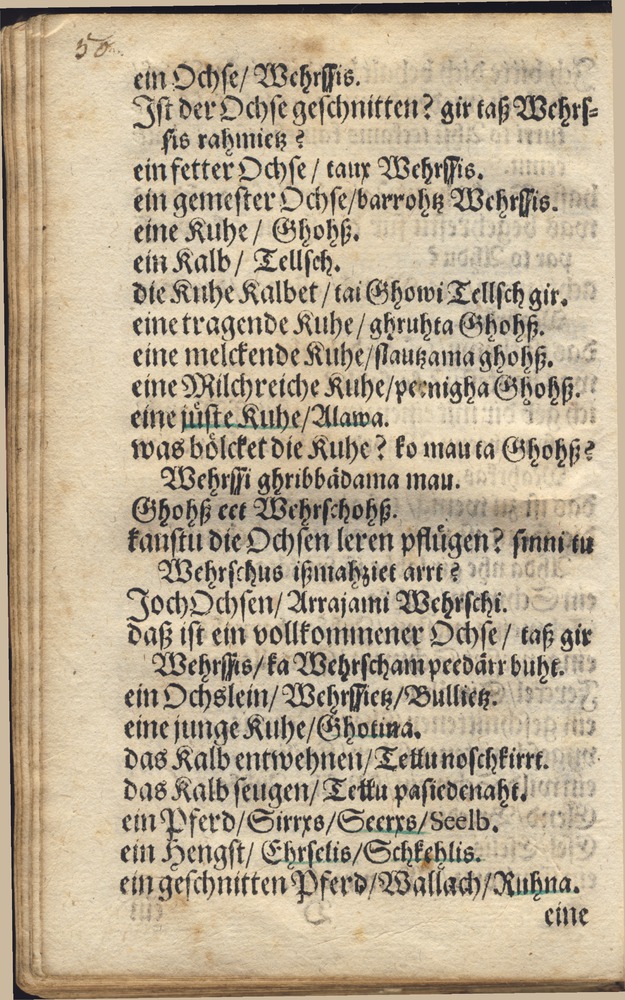
| Manc1638_PhL_272_1 | @v{ein Ochſe/} Wehrſẜis. |
| Manc1638_PhL_272_2 | @v{Jſt der Ochſe geſchnitten?} gir taß Wehrſ- |
| Manc1638_PhL_272_3 | ẜis rahmietz? |
| Manc1638_PhL_272_4 | @v{ein fetter Ochſe/} taux Wehrſẜis. |
| Manc1638_PhL_272_5 | @v{ein gemeſter Ochſe/} baŗŗohtz Wehrſẜis. |
| Manc1638_PhL_272_6 | @v{eine Kuhe/} Ghohß. |
| Manc1638_PhL_272_7 | @v{ein Kalb/} Tellſch. |
| Manc1638_PhL_272_8 | @v{die Kuhe Kalbet/} tai Ghowi Tellſch gir. |
| Manc1638_PhL_272_9 | @v{eine tragende Kuhe/} ghruhta Ghohß. |
| Manc1638_PhL_272_10 | @v{eine melckende Kuhe/} ſlautzama Ghohß{ghohß}. |
| Manc1638_PhL_272_11 | @v{eine Milchreiche Kuhe/} peenigha Ghohß. |
| Manc1638_PhL_272_12 | @v{eine jüſte Kuhe/} Alawa. |
| Manc1638_PhL_272_13 | @v{was bölcket die Kuhe?} ko mau ta Ghohß? |
| Manc1638_PhL_272_14 | Wehrſẜi ghribbädama mau. |
| Manc1638_PhL_272_15 | Ghohß eet Wehrſchohß. |
| Manc1638_PhL_272_16 | @v{kanſtu die Ochſen leren pflügen?} ſinni tu |
| Manc1638_PhL_272_17 | Wehrſchus ißmahziet arrt? |
| Manc1638_PhL_272_18 | @v{Joch Ochſen/} Arrajami Wehrſchi. |
| Manc1638_PhL_272_19 | @v{daß iſt ein vollkommener Ochſe/} taß gir |
| Manc1638_PhL_272_20 | Wehrſẜis/ ka Wehrſcham peedärr buht. |
| Manc1638_PhL_272_21 | @v{ein Ochslein/} Wehrſẜietz/ Bullietz. |
| Manc1638_PhL_272_22 | @v{eine junge Kuhe/} Ghotiņa. |
| Manc1638_PhL_272_23 | @v{das Kalb entwehnen/} Teļļu noſchkirrt. |
| Manc1638_PhL_272_24 | @v{das Kalb ſeugen/} Teļļu paſiedenaht. |
| Manc1638_PhL_272_25 | @v{ein Pferd/} Sirrxs/ Seerxs/ @l{Seelb.} |
| Manc1638_PhL_272_26 | @v{ein Hengſt/} Ehrſelis/ Schkehlis. |
| Manc1638_PhL_272_27 | @v{ein geſchnitten Pferd/ Wallach/} Ruhna. |
| @b{eine} | |